Wine Diary
Winter greetings before Easter!
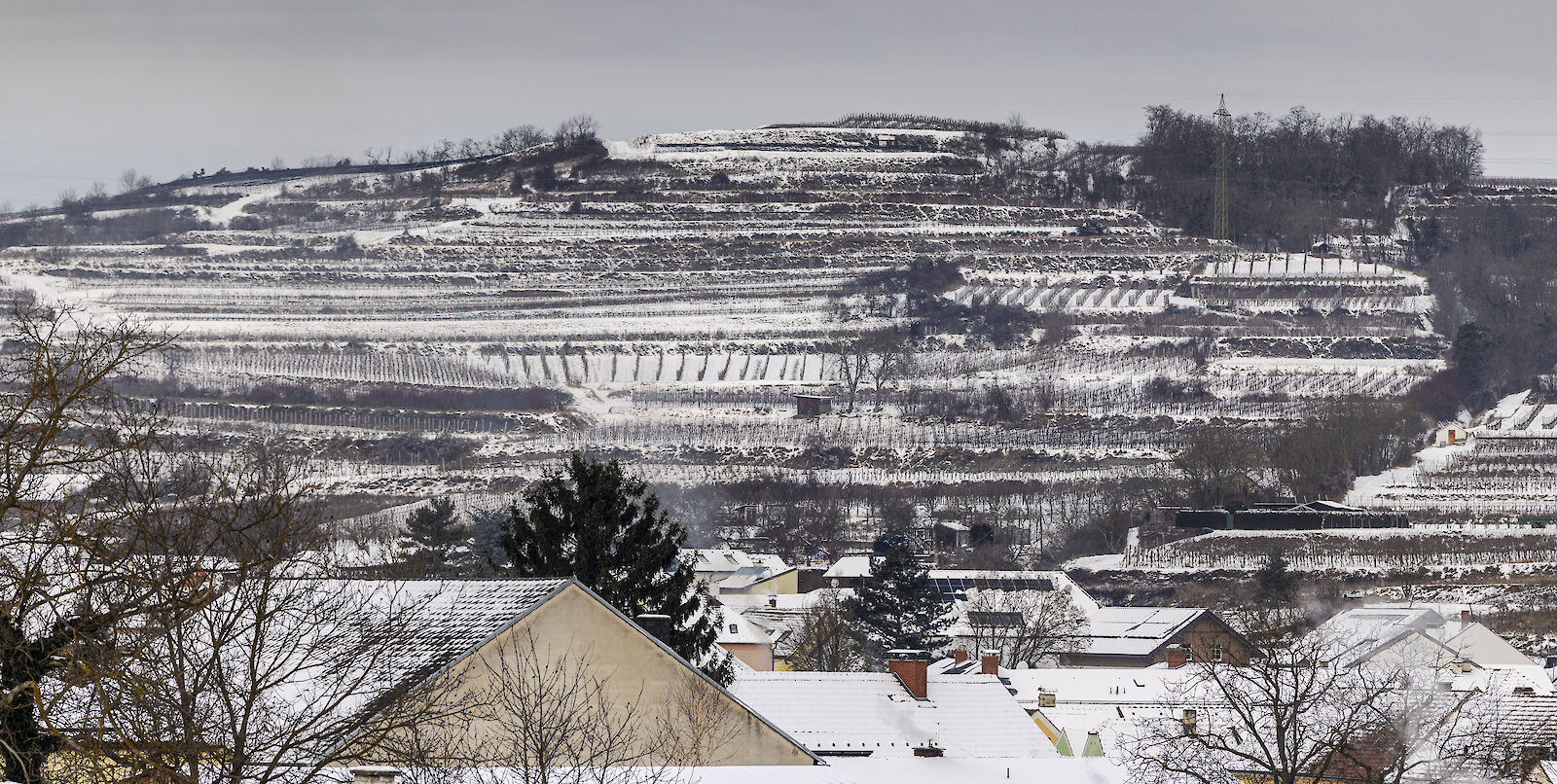
After a very pleasant, sunny, but also dry month, winter is making a comeback! Low temperatures, strong gusts of wind, and cold rain showers are making work in the vineyard difficult, but this harsh weather is delaying budbreak—and that’s exactly what we want: The higher the young, delicate shoots have grown by the time of the dreaded “Frost Saints” in mid-May, the more they are exposed to potential late frosts. Later budbreak means less risk!
We also welcome the rain falling during this change in weather. In slightly moist soil, nutrients are released—mobilized energy that can be transported via the sap streams of the vines to the shoots and buds. Budbreak should occur later, but it should be vigorous. With the recent showers, we have almost reached the long-term average for total precipitation. Here, too, the right amount at the right time is considered optimal, because too much precipitation at the wrong time threatens the health of the vineyards. With 450–550 l/m², the Kamptal is considered a rather dry wine-growing region, compared to southern Styria, for example, with 800–over 1,000 l/m².
The weather has a significant impact on each individual vintage. A look at the climate data for each wine year is highly informative for curious wine enthusiasts.